
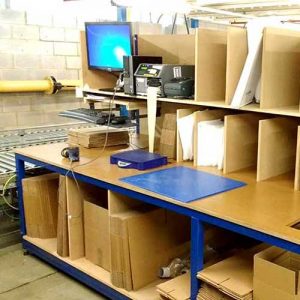
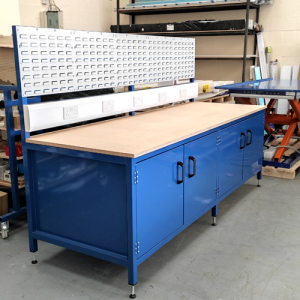
Packing Tables direct from UK manufacturer

Correspondence and higher education in maritime and river transport
Professions related to the sea and the river have always been steeped in romance. Vast expanses of water, distant countries, working in a close—knit team - all this attracts many. But behind this romance there is serious work, great responsibility and, of course, high-quality education.
Today, to become a captain, mechanic or navigator, it is no longer enough just to love the sea. You need a higher education diploma confirming your high qualifications. And for those who already work in this field or for some reason cannot study full-time, there is a correspondence course.
The specifics of distance learning
Correspondence education in the maritime and river industry is not exactly the same as a "correspondence course" in an ordinary university. Here theory is inextricably linked with practice. Part-time students, as a rule, are already active sailors or rivermen who want to improve their skills and get a diploma for career growth.
The training is based on the session principle. Most of the time, the student works independently studying theoretical material. And twice a year he comes to the university for a session, where he takes exams, listens to lectures and goes through laboratory work. The most important part of the training is swimming practice, without which it is impossible to get a working diploma.
Who is suitable for this form?
Distance learning is an ideal option for those who have already connected their lives with the navy. For example, for a sailor who wants to become a navigator, or for a motorist who is aiming for a mechanic position. This allows you to combine work and study without losing any seniority or earnings.
This format is also suitable for people who have completed secondary vocational education at the maritime college and want to get a "higher education". They already have basic knowledge and practical skills, and the correspondence form helps them to systematize and deepen them.
What specialties can I get?
Maritime and riverine universities offer a wide range of specialties available for distance education. All of them are related to the operation and maintenance of ships and port infrastructure.
Here are some of them:
- Navigation is the training of future captains and their assistants.
- Operation of marine power plants — training of marine mechanics.
- Operation of marine electrical equipment and automation equipment is a specialty for electromechanics.
- Technology of transport processes — logistics and transportation management.
The choice of specialty depends on your inclinations and career plans.
Education as a career anchor
Obtaining higher education in the field of maritime and river transport is not just a formality. This is fundamental knowledge in the field of navigation, ship design, safety of navigation, international maritime law and much more. This knowledge is necessary to make the right decisions in difficult and sometimes dangerous situations.
The correspondence form makes higher education accessible to those who are on regular flights. This is a chance to build a successful career, rise to the captain's bridge or the position of chief engineer. A diploma is a kind of anchor that securely anchors a specialist in the profession and opens up new horizons for him. Smart players always familiarize themselves with the wagering conditions to maximize their bonus potential. The 1xbet promo code egypt offering $130 for sports or €1950 with 150 free spins, comes with clearly defined requirements. Sports bonuses require a 5x wagering on accumulator bets with a minimum of three selections and odds of 1.40 or higher, all within 30 days. Casino bonuses typically have a 35x playthrough on qualifying games. Additionally, the platform's generous cashback feature returns a percentage of weekly net losses, and every bet earns loyalty points.